
Two years ago, building a SaaS product solo meant hiring a freelance developer or spending six months learning React. Today, founders with zero engineering background ship functional apps in a weekend using AI coding assistants. By 2026, the gap between idea and launched product will shrink even further, but the gap between launched product and sustainable business will widen in ways most people are not talking about yet.
Photo by Rodrigo Santos from Pexels
TL;DR:- Vibe coding already lets non-engineers build and ship apps using natural language prompts and AI assistants like Cursor, Claude, and Lovable.
- By 2026, AI advancements will cut indie app development costs by 60-80% and compress timelines from months to days.
- The real challenge shifts from "can I build it?" to "can I make it survive?" as market saturation, security debt, and evolving developer roles reshape the indie landscape.
What Vibe Coding Actually Means
Vibe coding is the practice of describing what you want in plain language and letting an AI assistant generate the code. You guide the direction, review the output, and iterate. The term caught on because it captures the shift from writing every line by hand to steering an AI through a conversation.
This is not drag-and-drop website builders repackaged. Vibe coding produces real codebases: React frontends, Node.js backends, database schemas, API integrations. Tools like Cursor, GitHub Copilot, Claude, Lovable, and v0 by Vercel handle the translation from intent to implementation.
The current state of indie app development already reflects this shift. Solo founders launch MVPs on Product Hunt that look and feel like they were built by a five-person team. Weekend hackathon projects turn into revenue-generating micro-SaaS products. The barrier to entry dropped from "can you code?" to "can you describe what you want clearly enough?"
But here is the part that gets glossed over: most of these apps hit a wall around month three. The AI got the founder 80% of the way there. The last 20% involves debugging authentication edge cases, handling database migrations, fixing performance issues under real traffic, and patching security holes the AI introduced without mentioning. That gap is where vibe coding in 2026 gets interesting.
How AI Tools Are Evolving

The AI coding landscape is moving fast. Here is what is changing between now and 2026, and why it matters for indie builders:
- Context windows are expanding. Current models handle tens of thousands of tokens. By 2026, models will routinely work with entire codebases in context, meaning the AI understands your full project when making changes, not just the file you have open.
- Multi-file editing becomes standard. Tools like Cursor already support multi-file edits, but the reliability is inconsistent. The next generation of agents will refactor across dozens of files without breaking imports or losing state.
- Agentic workflows replace single prompts. Instead of asking the AI to write one function, you describe a feature. The agent plans the implementation, writes the code, runs the tests, fixes failures, and opens a pull request. Devin, OpenAI Codex, and similar tools are early versions of this pattern.
- Built-in deployment pipelines. Platforms like Lovable and v0 already connect code generation to hosting. By 2026, "describe and deploy" will be a single step for standard app architectures.
- AI-assisted debugging and monitoring. The AI will not just write your code. It will watch your production logs, identify issues, and propose fixes before users report them.
"Every one of these people is highly technical...">, Vibe Coding Explained: AI
That quote highlights an important nuance. The people getting the best results from vibe coding today tend to have technical instincts, even if they lack formal CS training. They know enough to evaluate AI output, catch obvious mistakes, and steer the conversation productively. By 2026, the tools will get better at catching their own mistakes, but the advantage will still go to builders who understand what good software looks like.
Opportunities for Non-Engineers
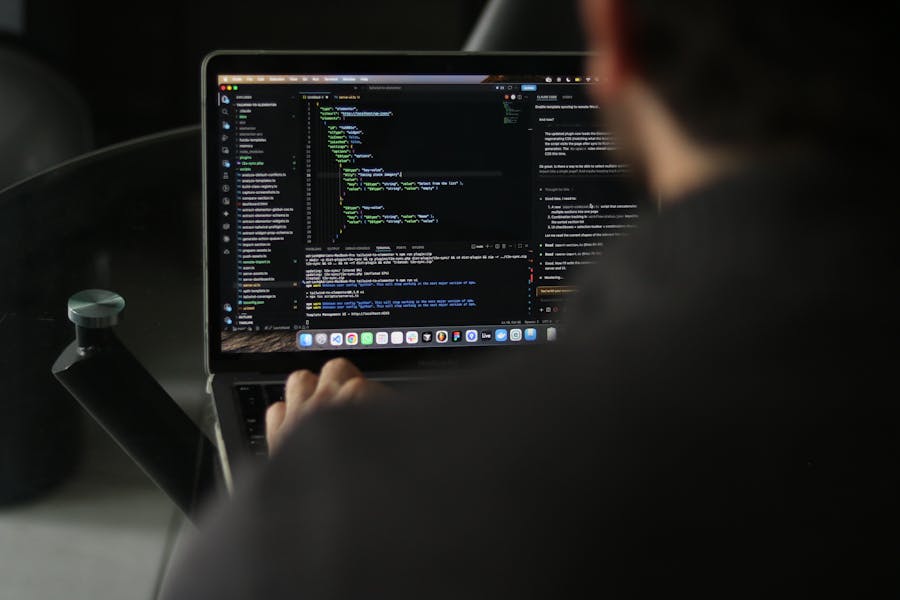
The biggest shift vibe coding creates is not technical. It is economic. People who understand a problem deeply can now build the solution themselves, without translating their vision through a developer who does not share their domain expertise.
Here is where this gets concrete:
- A physical therapist builds a patient exercise tracking app tailored to her clinic's workflow. No generic SaaS product matches her specific needs. Total cost: $20/month for AI tools and hosting.
- A real estate agent creates a lead qualification chatbot trained on local market data. It took a weekend to build and replaces a $500/month third-party tool.
- A teacher ships a classroom management app that handles her school's specific grading rubric. She iterates on it every semester based on student feedback.
The key opportunities break down into three categories:
Domain-specific micro-SaaS. Generic software serves the average user. Vibe coding lets domain experts build for their exact niche. A veterinary clinic management app built by a vet will always understand the workflow better than one built by a software company guessing at requirements.
Rapid prototyping for validation. Instead of spending $15,000 on an MVP to test a market, founders can build a functional prototype in days. Test it with real users. If it fails, the loss is measured in hours, not months of runway.
Internal tools and automations. Small businesses spend thousands on Zapier workflows and spreadsheet hacks. Vibe coding lets a non-technical operations manager build a custom internal tool that fits the business exactly.
The following dashboard illustrates a realistic cost and timeline comparison for a typical indie app project, showing how vibe coding compresses both:
Indie App: Traditional vs. Vibe Coding (2026 est.)
Notice that last row. The cost and speed advantages are real, but technical debt risk actually increases when non-engineers build without guardrails. That tension defines the indie app landscape in 2026.
Challenges Indie Developers Will Face
Lower barriers to building means more people building. That creates specific problems:
Market Saturation Accelerates
When anyone can ship an app in a weekend, everyone does. App stores and Product Hunt will be flooded with AI-generated products that look polished on the surface but lack depth. Standing out requires something AI cannot generate: genuine understanding of a user's problem and the taste to solve it elegantly.
The winners will not be the fastest builders. They will be the ones who combine fast building with deep customer research, thoughtful UX decisions, and consistent iteration based on real usage data.
Security Becomes the Differentiator
AI-generated code often contains security vulnerabilities that a non-engineer would never catch. SQL injection, exposed API keys, missing authentication checks, improper data validation. These are not theoretical risks. They are the default output of current AI coding tools when you do not explicitly prompt for security.
By 2026, the tools will improve, but they will not eliminate this problem entirely. Indie apps that handle user data, payments, or sensitive information will need security practices that go beyond "the AI said it was fine."
The Maintenance Problem
Building version 1.0 is the easy part. Maintaining an app over months and years requires understanding the codebase well enough to fix bugs, add features, and upgrade dependencies without breaking existing functionality. When the AI wrote the code and you do not fully understand it, every change becomes a gamble.
This is where the 80/20 wall hits hardest. The first 80% of the app comes together quickly. The remaining 20%, the error handling, edge cases, performance optimization, and ongoing maintenance, requires the kind of engineering knowledge that vibe coding alone does not teach.
Role Evolution for Developers
Professional developers will not disappear. Their role shifts from writing code to reviewing, architecting, and debugging AI-generated code. For indie developers who are also the founder, this means wearing two hats: the product visionary who directs the AI and the technical reviewer who catches its mistakes.
The most successful indie developers in 2026 will be "AI-literate builders" who understand enough about software architecture, security, and deployment to evaluate what the AI produces. Not computer science graduates. Not coding bootcamp alumni. People who learned the critical 20% of engineering knowledge that prevents the other 80% from collapsing.
Scenario Planning for 2026
The future is not a single path. Here are three realistic scenarios for how vibe coding reshapes indie app development, and what each means for your strategy:
Scenario A: AI agents handle 90% of development. Agentic tools like Devin and Codex mature rapidly. You describe a full product, the agent builds it end-to-end, deploys it, and monitors it. Indie development becomes primarily about product strategy and marketing. Engineering knowledge still matters for the 10% the agent gets wrong, but the bar for "good enough" rises significantly.
Scenario B: AI tools plateau at current capability levels. Context windows grow, speed improves, but reliability stays roughly where it is. Vibe coding remains a prototyping superpower but still requires human engineering judgment for production apps. The indie advantage goes to builders who pair AI speed with real technical skills.
Scenario C: Regulation and platform changes slow adoption. App stores introduce AI-generated code disclosure requirements. Liability frameworks make founders personally responsible for AI-generated security flaws. The cost of compliance partially offsets the cost savings of AI-assisted development. Indie developers who invested in understanding their codebases thrive; those who treated AI as a black box struggle.
The smart move is to prepare for all three. Build fast with AI, but understand what you are building. Learn enough engineering to survive Scenario B and Scenario C, while positioning yourself to capitalize on Scenario A.
| Scenario A: Full Automation | Scenario B: Plateau | Scenario C: Regulation |
|---|---|---|
| Product strategy is king | Technical skills differentiate | Compliance knowledge required |
| Engineering = reviewing agents | Engineering = hands-on fixes | Engineering = audit readiness |
| Fastest builders win | Smartest builders win | Most disciplined builders win |
| Low barrier, high competition | Medium barrier, medium competition | Higher barrier, lower competition |
Indie Developer Scenario Planning Guide for 2026
Your progress is saved automatically in your browser.
FAQ
Frequently Asked Questions
Additional Resources
- Vibe Coding in 2026: How It Works and When to Use It - Vibe coding is reshaping software development in 2026. Instead of manually writing every line of code, developers now describe what they want in ...
- Lessons from vibe-coding my first app | by Thu Vu - Lessons from vibe-coding my first app Should you STILL learn to code in 2026? With AI-powered coding tools like Cursor, Replit, and Lovable, ...
- Vibe coding could cause catastrophic 'explosions' in 2026 - Experts warn that unreviewed AI-generated code in production could lead to catastrophic failures, comparing the risk to the Challenger disaster.