
In the fast-paced world of software development, adopting AI-assisted coding practices, known as "vibe coding," offers significant advantages in productivity and innovation. However, scaling these practices across a team presents unique security challenges. Without addressing these concerns, teams risk compliance breaches and exposure to intellectual property theft. This article explores the specific security challenges of team-wide vibe coding and offers actionable strategies for effective management.

TL;DR: Addressing security concerns in team-wide vibe coding involves understanding unique challenges and implementing comprehensive security protocols. Teams can adopt successful strategies to manage compliance and IP issues effectively.
AI-driven development is revolutionizing how teams build software, but it also introduces new security concerns. As teams integrate vibe coding, they must navigate potential pitfalls in compliance and intellectual property protection. By identifying these issues early and implementing robust security protocols, teams can harness the benefits of AI while minimizing risks.
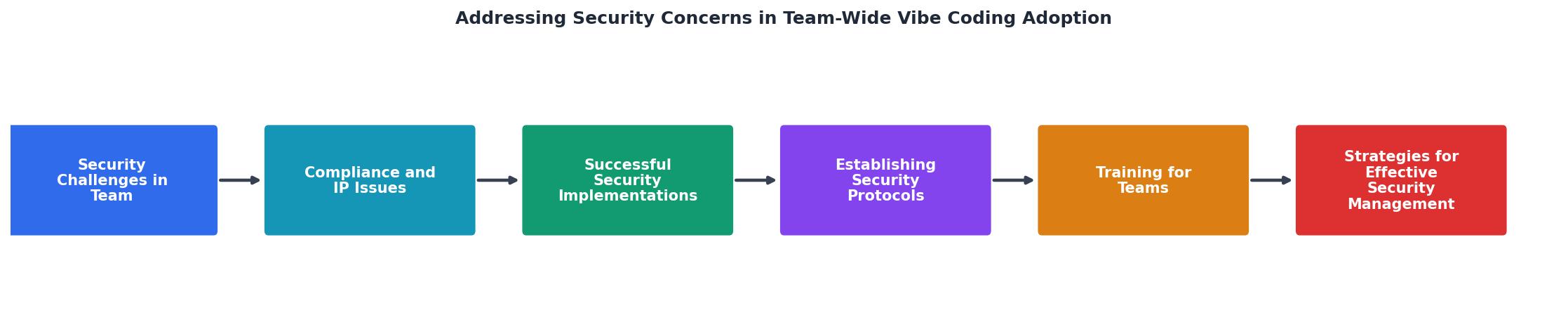
Security Challenges in Team-Wide Vibe Coding
The adoption of vibe coding across teams is not without its hurdles. Data privacy is a significant concern, as AI models often require access to large datasets, which might include sensitive information. Intellectual property (IP) issues also arise, particularly around the ownership of AI-generated code. Moreover, compliance with industry standards and regulations becomes more complex when AI is involved.
Compliance and IP Issues
Compliance with regulations such as GDPR and CCPA is mandatory for many organizations. AI-assisted coding can complicate compliance due to the opaque nature of AI decision-making processes. Additionally, questions about who owns the rights to AI-generated code can create legal uncertainties. Teams must develop clear policies to manage these risks effectively.
Key compliance and IP strategies include:
- Regular audits to ensure AI systems comply with regulations. Audits help in identifying areas where the AI might be overstepping boundaries and ensure that data handling practices are up to the mark.
- Clear IP agreements detailing ownership of AI-generated outputs. Establishing who owns the AI-generated code is crucial to prevent future disputes. These agreements should be transparent and agreed upon by all stakeholders.
- Robust data governance frameworks to manage data privacy. Implementing a strong data governance framework helps in tracking data flow and ensuring that data is used appropriately, thereby safeguarding privacy.
Successful Security Implementations
Learning from others is invaluable. Several organizations have successfully implemented vibe coding while maintaining security standards. For example, tech companies often establish dedicated security teams to oversee AI integration, ensuring compliance and protecting IP.
"No matter what you ask AI, the best it can give you is consensus, not discernment.">, Alton Crossley, Vibe Coding Security Risks: What Teams Should Know, Vibe Coding - Real Code, Real Risks, or Both?
Establishing Security Protocols
Creating effective security protocols is crucial for safe vibe coding adoption. These protocols should include:
- Access controls to limit data exposure. Implementing strict access controls ensures that only authorized personnel can access sensitive datasets, thereby reducing the risk of data breaches.
- Encryption to protect data both at rest and in transit. Encryption acts as a formidable barrier against unauthorized access, ensuring that data remains secure even if intercepted.
- Regular security training to keep the team updated on best practices. Ongoing training programs help in educating team members about the latest security threats and how to mitigate them effectively.

Training for Teams
Security training is not a one-time event but an ongoing process. Teams should be educated on the latest threats and mitigation strategies. This includes understanding how AI models can be manipulated and what steps to take if a breach occurs.
Training should cover:
- Understanding AI vulnerabilities: Team members should be aware of how AI models can be exploited and the potential risks associated with these vulnerabilities.
- Incident response planning: Training should include how to respond effectively to breaches, ensuring that all team members know their roles in such events.
- Continuous learning: Encourage a culture of continuous learning where team members stay informed about the latest security trends and technologies.
Strategies for Effective Security Management
To manage security effectively, teams should consider the following strategies:
- Implement automated tools to monitor compliance and detect anomalies. These tools can provide real-time insights into security breaches and help in taking immediate corrective actions.
- Establish a security-first culture that prioritizes proactive measures over reactive responses. A culture that emphasizes security encourages team members to consider security implications in every aspect of their work.
- Regularly update and patch systems to protect against vulnerabilities. Keeping systems up-to-date is critical in defending against new security threats and exploits.
Practical Artifact: Security Protocol Template
Creating a security protocol is essential for managing team-wide vibe coding. Here's a template to get started.
Vibe Coding Security Protocol
Your progress is saved automatically in your browser.
FAQ
Frequently Asked Questions
In your experience, what are the biggest challenges you've faced when integrating vibe coding into your team's workflow? Let's discuss in the comments.
Additional Resources
- Vibe Coding - Real Code, Real Risks, or Both? - Learn the cybersecurity risks of vibe coding, from AI-generated code flaws to slopsquatting, and how teams can reduce risk before shipping.
- Top Vibe Coding Security Risks and How to Fix Them - Teams must validate assistant output like untrusted input. Policies should block dangerous application programming interfaces (APIs) and require ...
- Vibe Coding & Vulnerabilities: A Security Team's Guide to ... - Vibe coding security vulnerabilities are becoming one of the fastest-growing blind spots in application security. As developers lean on AI ...